Every pipe rehabilitation project starts with the same problem: you cannot apply an epoxy lining to a contaminated pipe wall. Grease, biofilm, scale and corrosion block adhesion — regardless of material quality or installer skill. That's why high-speed mechanical chain cleaning is not optional. It's the step that determines whether everything that follows will hold.
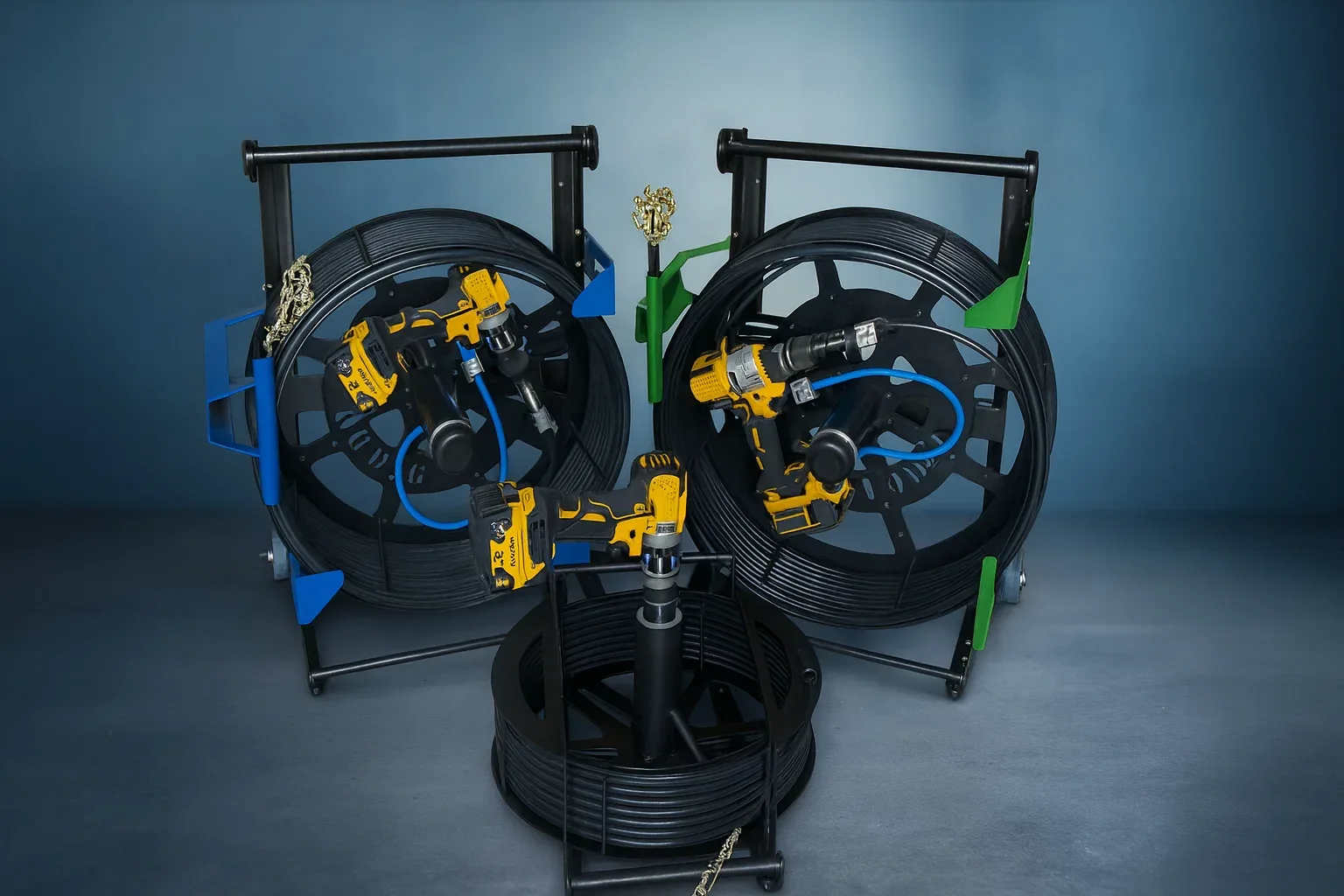
NoDig V8, V1 and mini6 machines are built specifically for this task. Rotating chains at high speed abrasively strip deposits from the internal pipe wall — without chemicals, without excavation, without compromising surface quality.
What is high-speed chain pipe cleaning?
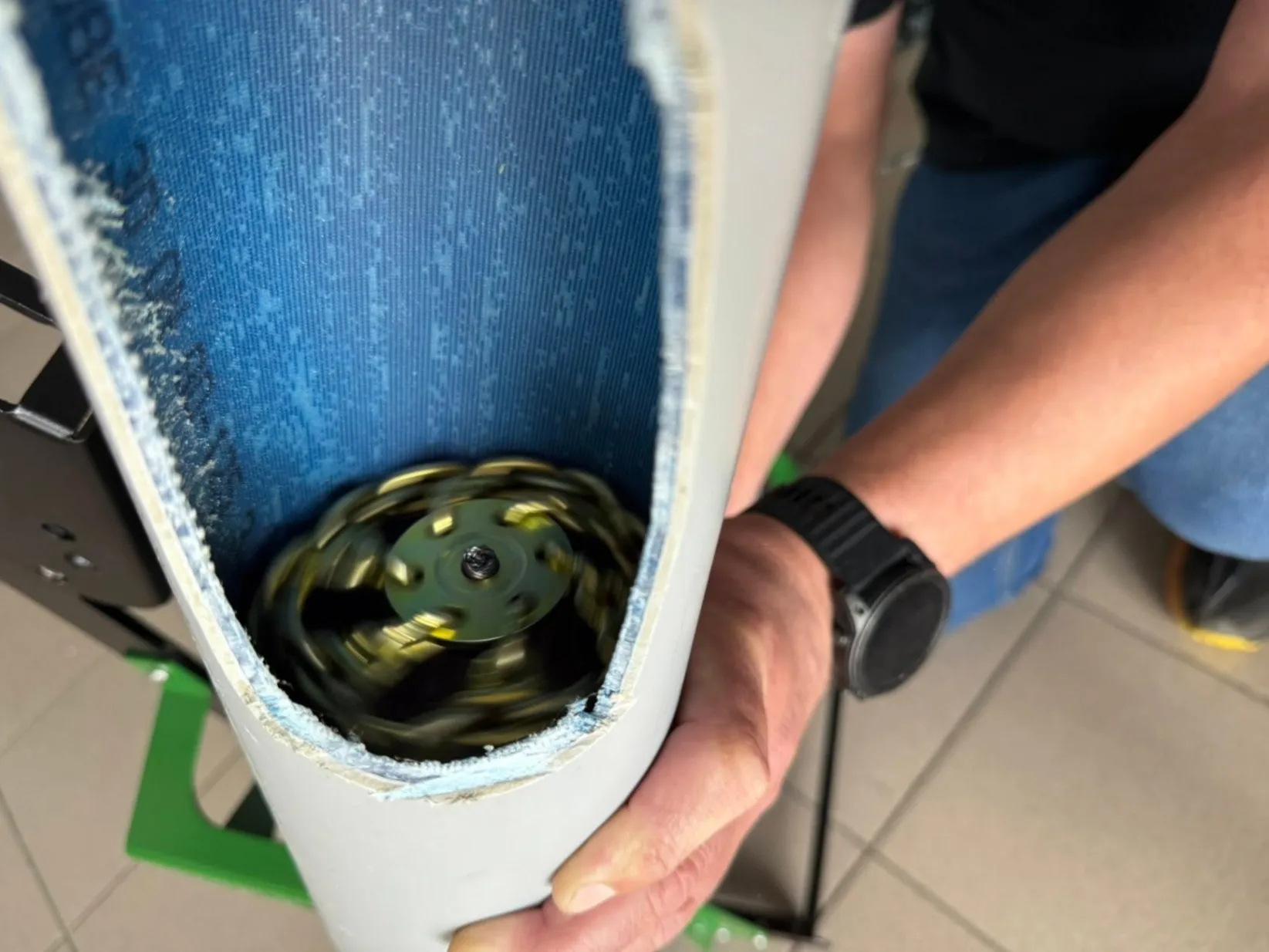
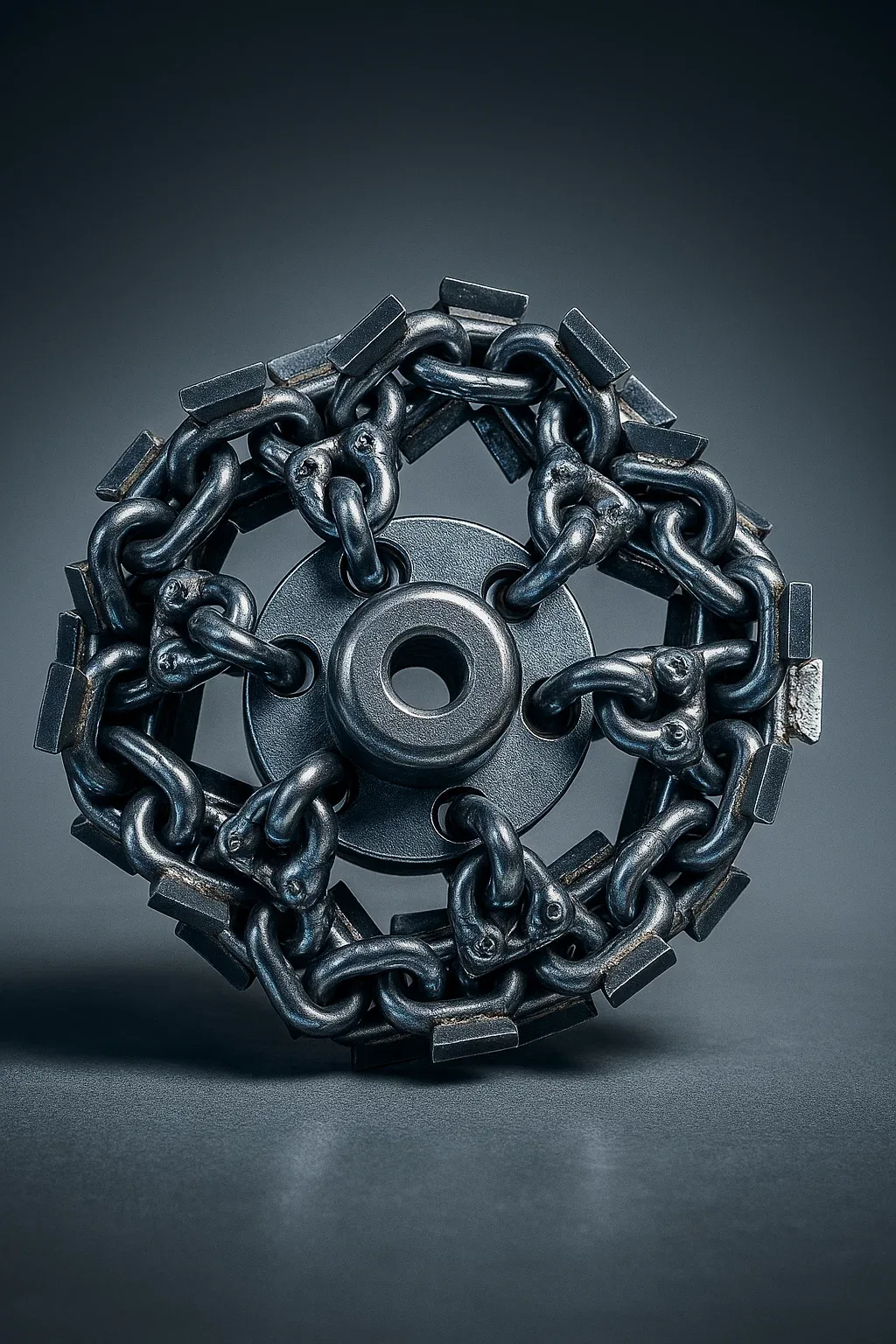
High-speed chain pipe cleaning is a mechanical trenchless method that uses rotating metal chains at speed to strip scale, grease and corrosion from the internal pipe wall. Chains are matched to deposit type and pipe diameter — different tools for scale, for corrosion, for grease.
Unlike water jetting, chains mechanically abrade the surface and remove hard, adhering deposits that water cannot shift. Unlike chemical cleaning, there is no risk of pipe material damage or environmental contamination. The result is a uniform, clean surface — ready for inspection or epoxy coating.
When high-speed chain cleaning is the right answer
- Surface preparation before epoxy coating or relining — the non-negotiable first step
- Drain and sewer unblocking with hard deposits
- Routine preventive maintenance of municipal and industrial pipe networks
- Scale, grease, corrosion and biofilm removal without chemicals
- Residential buildings, industrial plants and municipal infrastructure
The numbers that matter
Cleaning is not a cost — it's an investment in the quality of everything that follows. A pipe that wasn't mechanically cleaned before coating hasn't been rehabilitated. It's just been painted over.
Machine comparison: V8, V1 and mini6
| Parameter | V8 | V1 | mini6 |
|---|---|---|---|
| Application | Heavy-duty: industrial and municipal networks | Mobile interventions, fast deployment | Smaller profiles, confined spaces, buildings |
| Cleaning power | High — hard scale and thick deposits | Medium-high | Optimised for smaller diameters |
| Mobility | Robust, built for tough sites | Compact, easy transport | Lightweight, minimal footprint |
| Pipe diameters | DN50–DN150 | DN32–DN100 | DN32–DN100 |
| Best suited for | Municipal infrastructure, industry | Residential buildings, rapid response | Internal drainage, tight access |
| Drive | Battery (DeWALT 18V/54V) | Battery (DeWALT 18V) | Any cordless drill (not included) |
Experienced contractors carry all three models and select by site conditions. V8 for demanding industrial and municipal jobs, V1 for rapid building interventions, mini6 for everything smaller and tighter.
Professional cleaning process — step by step
CCTV camera inspection — define the condition
Camera inspection documents pipe diameter, material, type and location of deposits, and confirms that mechanical cleaning is the appropriate approach. No inspection means no informed tool selection.
Select machine, chains and cable
Based on diameter and deposit type, the right tools are selected from the catalogue. Scale chains differ from grease chains differ from corrosion chains. The cable must match working length and machine type. This is specification-based selection, not guesswork.
Mechanical chain cleaning
The machine feeds the cable with chain tool into the pipe and rotates at high speed. Chains mechanically strip deposits from the pipe wall. Pass speed and number of passes depend on fouling level. The standard isn't "looks clean" — it's a clean, dry surface that meets the requirement of the next step.
Post-cleaning camera verification
After cleaning, the camera documents the result. This is a dual check: it confirms cleaning quality and provides the first image of pipe wall condition for the next step — coating or relining.
Handover to the next step
The cleaned pipe is returned to service — or handed over to the epoxy coating team. Mechanical chain cleaning is the only way to achieve a consistent substrate on which lining actually holds long-term.
Complete system: machine + chains + cables + inspection
- Pipe cleaning machines — V8, V1, mini6 with technical specifications
- Cleaning chains — matched to pipe diameter and deposit type
- Cables and covers — less friction, better reliability
- Inspection cameras — condition check before and after cleaning
V8, V1 and mini6 — NoDig d.o.o.
Designed and manufactured in Osijek, Croatia. Direct from the manufacturer — no intermediaries. Technical support and distribution across 15+ European countries.
Cleaning as part of the rehabilitation chain
In practice, chain cleaning is not an isolated procedure — it's a step in a workflow that typically runs: CCTV inspection → mechanical cleaning → verification inspection → epoxy coating → documented sign-off. NoDig V8, V1 and mini6 are designed to be compatible with the rest of the NoDig equipment ecosystem — same access points, same cable dimensions, same diameter configurations.
Contractors who provide full pipe rehabilitation — cleaning and coating — buy both the cleaning machines and the ProLight or ProLight2 for epoxy application. That's a complete service from access point to documented verification, which is exactly what municipalities and building managers are looking for.
Epoxy pipe coating — the next step after cleaningFrequently asked questions
High-speed chain pipe cleaning is a mechanical trenchless method in which rotating metal chains at speed abrasively remove scale, grease, corrosion and biofilm from the internal pipe wall — without excavation, without chemicals and without damaging the pipe material.
V8 (DN50–DN150) is optimal for demanding loads, industry and municipal networks with heavier deposits. V1 (DN32–DN100) is compact for mobile interventions and rapid deployment. mini6 (DN32–DN100) is lightweight for smaller pipe profiles and confined spaces — ideal for internal building drainage. Experienced contractors operate all three.
Epoxy resin does not adhere to grease, biofilm or loose deposits — regardless of resin quality. A clean and dry surface is the material prerequisite for a quality coating that lasts 25–50 years. Without mechanical chain cleaning, the lining will delaminate or crack.
Nodig develops, manufactures and sells pipe cleaning machines and accessories. Field cleaning work is carried out by professional contractors, municipal operators and industrial users. We also offer equipment training — see the Training Centre page.
Depending on the model and selected chains, equipment covers DN32 to DN150. mini6 and V1 are optimal for DN32–DN100; V8 covers DN50–DN150.
No. V8 and V1 run on DeWALT battery packs — no fixed power supply needed. mini6 is driven by any cordless drill, which is not included with the machine. All models can be used in residential buildings, on construction sites and in industrial facilities.