Epoxy pipe rehabilitation delivers long-lasting results — but only when every stage is executed correctly. The failures that destroy a lining are often invisible at the time of application. They emerge years later, once the coating has delaminated and the client is demanding a second intervention. These are the five mistakes that recur most often in the field — and why each of them is enough to void an entire project.
Why epoxy lining mistakes don't show up straight away
A freshly applied epoxy lining always looks the same — there is no visual test on the day that distinguishes a sound application from one that will fail. The difference only becomes apparent once the coating begins to give way. By that point, the client has no reason to have suspected a problem, and the contractor moved on long ago. That gap between cause and consequence is what makes mistakes in epoxy pipe rehabilitation so costly.
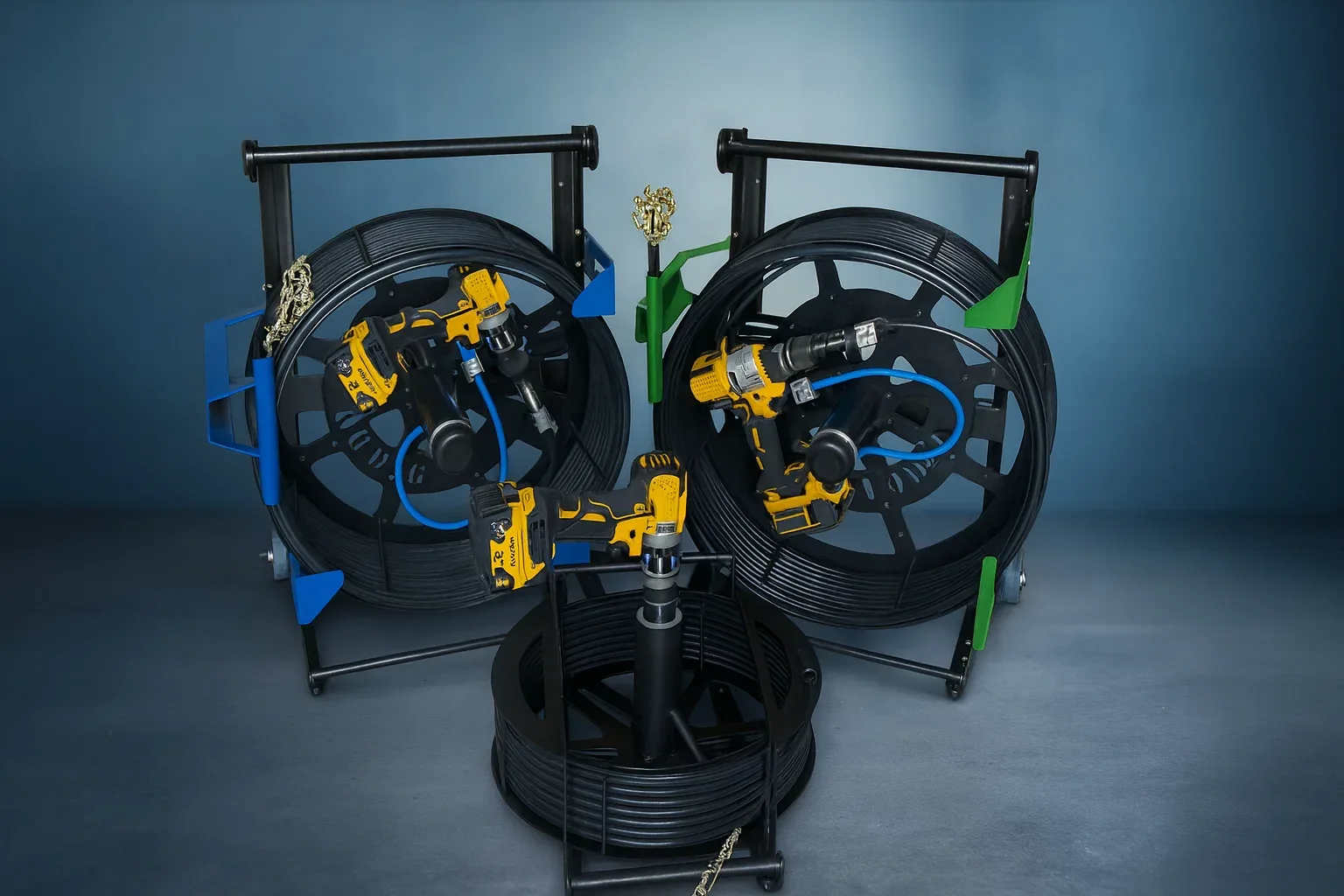
The five mistakes — and why each one can write off a project
Inadequate mechanical cleaning of the pipe wall
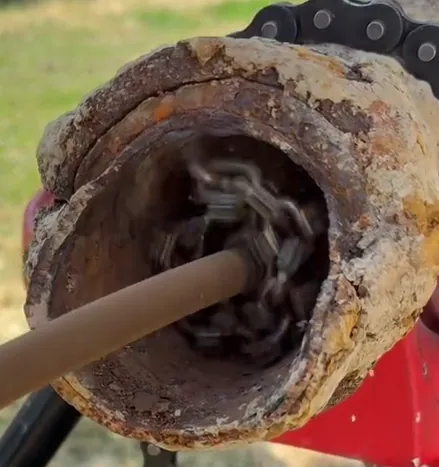
Epoxy resin bonds to the pipe wall — but only to a mechanically prepared wall, free of residual deposits. Scale, corrosion, and biofilm that are chemically bonded to the pipe material cannot be removed by water jetting. Jetting clears loose debris and blockages, but it cannot abrasively treat chemically bonded deposits. The method that most reliably prepares a pipe wall to the standard required for durable epoxy relining is high-speed chain cleaning.
If cleaning is skipped or carried out only partially, the lining will not achieve its designed adhesion at spots where deposits remain. It may look clean immediately after application, but under hydraulic load and thermal cycling, delamination follows.
Application to a wet or unconditioned pipe wall
Standard epoxy resins will not bond to a damp surface — this is not a precaution, it is chemistry. Moisture can come from active inflow due to incomplete isolation of the section, from condensation, or from inadequate drying after cleaning.
The result is the same as with incomplete cleaning: the lining fails to reach its designed adhesion. The problem is that pipe wall moisture is not always visible to the eye — a visual check is not enough. A drying and conditioning protocol must be defined and consistently applied before every application.
Skipping the verification survey
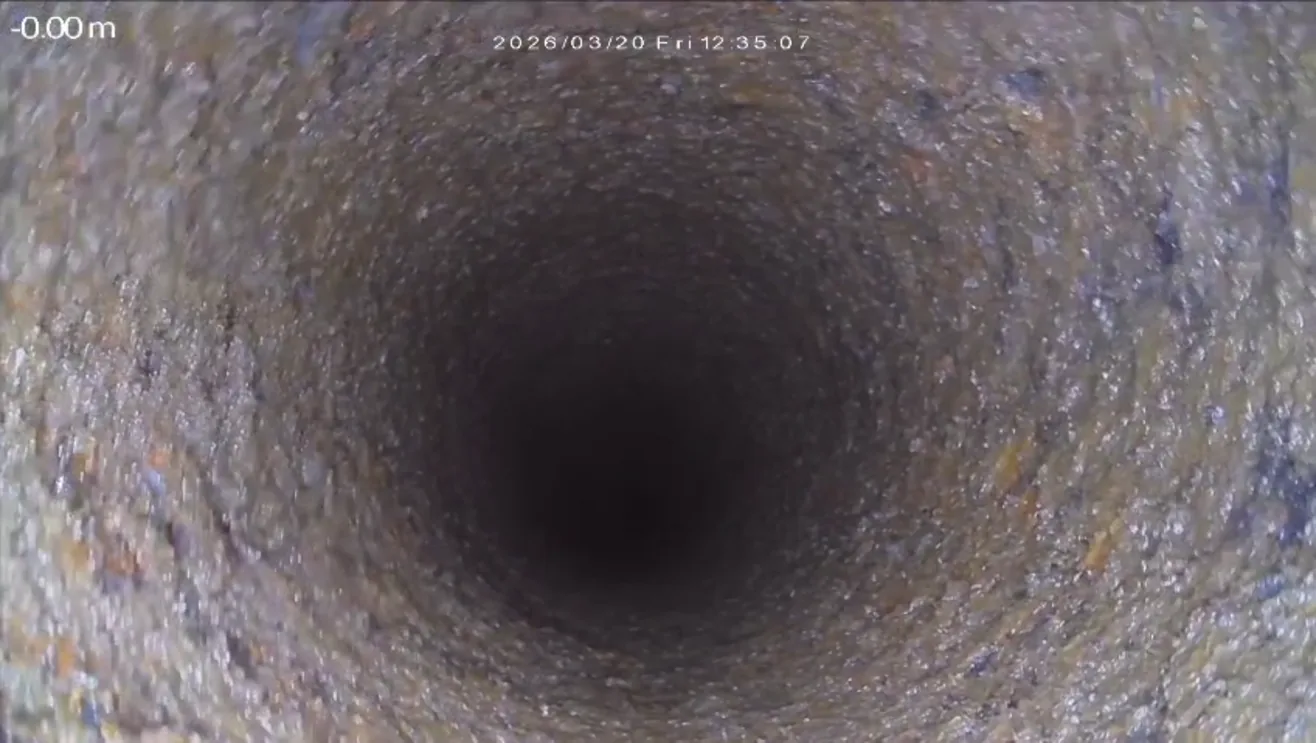
Between mechanical cleaning and epoxy application sits one step that time pressure often pushes out: a camera verification of pipe wall condition. Without it, there is no objective confirmation that cleaning produced a uniform, adherent substrate — or whether patches of deposit remain.
Every such patch is a future failure point. The verification survey is not a formality — it is the only objective evidence that the surface is ready for application, and it forms part of the project documentation that gives the client a basis for accepting the completed work.
Applying epoxy without a prior CCTV survey
Rush jobs often proceed on the assumption that what is in the pipe is already known — and the CCTV survey gets skipped because "we're cleaning and lining it anyway." But without a prior survey, you do not know which chain head to use for cleaning, whether the pipe wall is in a condition suitable for relining, where the lateral connections are that will need to be reinstated afterwards, or whether there is structural damage that makes relining the wrong solution altogether.
The mistake is not just technical — it can result in lining a section that requires a different rehabilitation approach entirely, meaning money lost and a problem left unsolved.
Returning the pipe to service before full cure
Epoxy resin needs time to cure before it can take on hydraulic load. The cure rate depends on conditions at the site. Passing water through a rehabilitated section before full polymerisation is reached can damage the fresh lining.
The completion CCTV survey — which objectively confirms lining quality and continuity — should only be carried out after the epoxy has fully cured. Cure timelines must be aligned with actual on-site conditions, not textbook assumptions.
What all five mistakes have in common
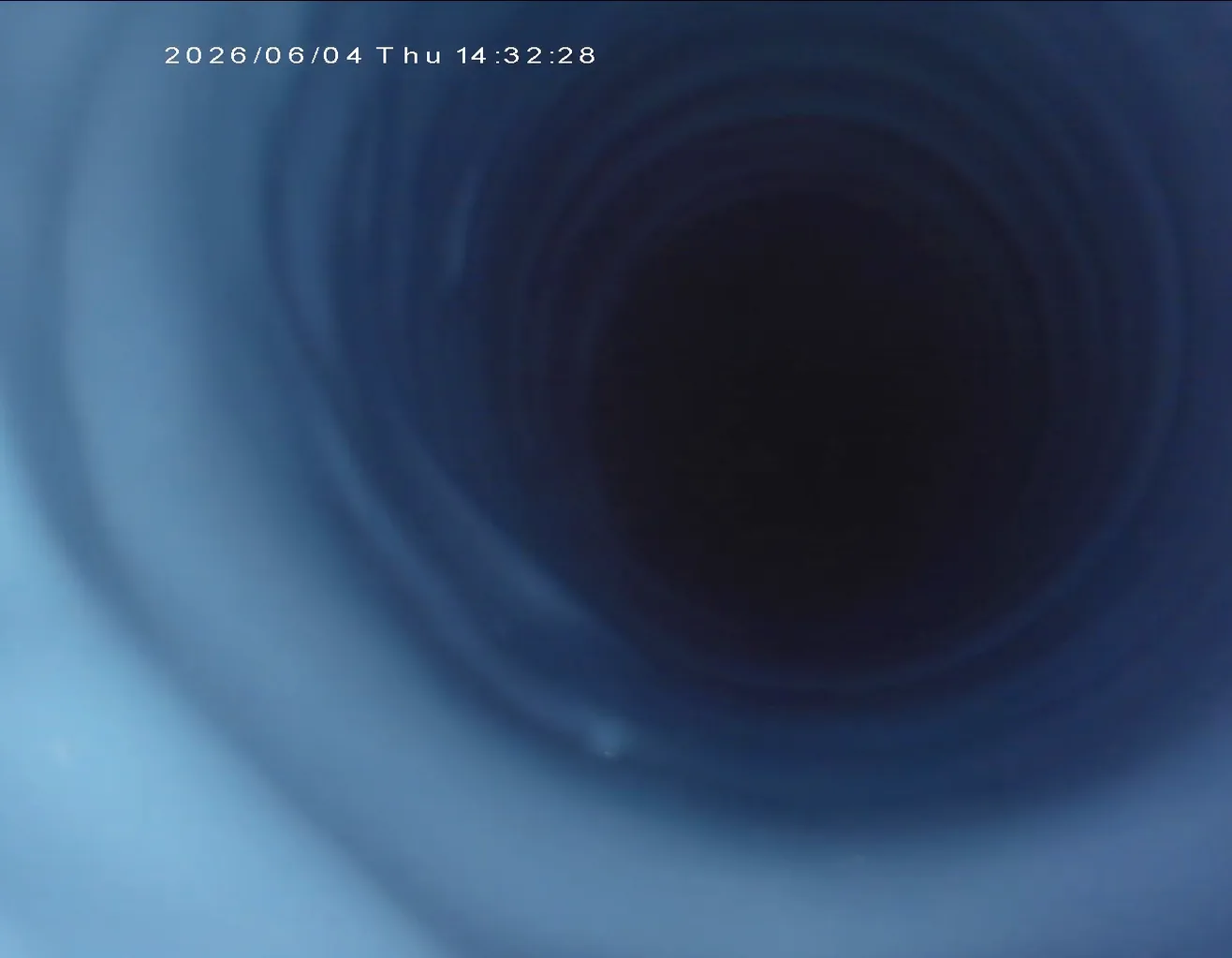
Every one of these mistakes looks like a clean job on the day it is carried out. There is no visual test at the point of application that distinguishes a sound lining from one that will delaminate. The only systematic answer to that is documentation: a pre-application CCTV survey, a cleaning protocol, a verification survey, an application record, and a final CCTV sign-off. Without that documentation, neither you nor the client has a verifiable basis for assessing the quality of the work.
High-speed pipe cleaning — machines and applications Epoxy pipe rehabilitation — ProLight and BSE system Read more: The complete rehabilitation workflow — from survey to sign-offA mistake that isn't visible isn't a mistake you avoided — it's a mistake whose bill hasn't arrived yet.
Equipment that eliminates causes — not just symptoms
NoDig chain cleaning machines and the BSE epoxy system are designed to work as a complete process: the same preparation standard, the same documentation, the same quality on every project.
Frequently asked questions
No. Jetting removes loose deposits and blockages, but cannot mechanically abrade chemically bonded scale and corrosion from the pipe wall. The adhesion required for durable epoxy relining demands high-speed chain cleaning — jetting alone is not a substitute.
The only objective evidence is a final CCTV survey conducted after the epoxy has fully cured, alongside handover documentation that includes the cleaning protocol, verification survey, and application record. Without that documentation, there is no way to confirm the conditions under which the work was carried out.
It depends on the extent of the problem. Isolated weak spots may sometimes be addressed locally, but widespread delamination typically requires a full re-application from scratch, including renewed pipe wall preparation.
Because there is no visual test that can reveal incomplete cleaning or residual moisture on the pipe wall on the day of application. A camera verification survey is the only objective checkpoint confirming that the surface is ready for epoxy.